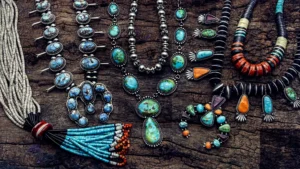
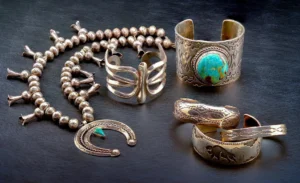
Before a bracelet is polished, a pendant is completed, or a turquoise stone is carefully secured within sterling silver, every piece of Native American jewelry exists only as raw material and artistic possibility. The transformation from unfinished silver and natural gemstones into wearable art depends entirely upon the knowledge, patience, and technical ability of the artisan. Unlike factory manufacturing, where machines repeat identical processes, traditional silversmithing requires countless individual decisions that shape the appearance, balance, durability, and character of every finished creation. Every stage of production reflects human judgment, ensuring that each handcrafted piece develops its own artistic identity.
The workshop itself becomes a place where craftsmanship is measured not by speed but by precision. Silver must be heated, shaped, joined, refined, and finished with exceptional care, while every decorative detail is introduced deliberately rather than mechanically. Throughout the entire process, artisans continually evaluate proportion, structural integrity, and visual harmony, making adjustments that allow the design to evolve naturally. This thoughtful approach explains why handcrafted Native American jewelry possesses a character that cannot be replicated through mass production.
Forging Silver Into Works of Enduring Beauty
Sterling silver is remarkably versatile, but its beauty is revealed only through skilled craftsmanship. The silversmith begins by cutting, heating, bending, forging, and shaping the metal according to the intended design. These seemingly simple operations demand years of experience because silver responds differently depending on its thickness, temperature, and the techniques being applied. A successful artisan understands how to guide the metal through each stage without compromising its strength, allowing intricate forms to emerge while maintaining lasting durability.
As the design develops, additional techniques introduce depth and individuality. Decorative stamp work creates texture through carefully placed impressions, engraving refines surfaces with intricate detail, repoussé forms raised patterns by shaping the metal from behind, and oxidation enhances contrast by darkening selected areas before final polishing. Each technique serves a distinct artistic purpose, yet all require remarkable control and consistency. The finished piece reflects not only technical ability but also the artisan’s understanding of how these methods work together to produce a balanced and harmonious design.
The Precision Required to Set Natural Stones
Stone setting is one of the most demanding stages of handcrafted jewelry because every natural material possesses unique dimensions, structural characteristics, and visual qualities. Before a gemstone is placed into its silver setting, it must often be cut, shaped, and polished to complement the overall composition. Lapidary artists and silversmiths work with extraordinary precision to ensure that every bezel fits securely while allowing the natural beauty of the stone to remain fully visible. Even the slightest variation in measurement can affect both the appearance and durability of the finished jewelry.
The relationship between gemstone and silver is carefully engineered rather than accidental. A well-designed setting protects the stone while presenting it as the visual centerpiece of the composition. Artisans consider height, proportion, color balance, bezel thickness, and surrounding decorative elements before permanently securing the stone. This level of planning ensures that craftsmanship enhances the natural material rather than competing with it, producing jewelry that feels unified from every angle.
Handcrafted Details That Machines Cannot Reproduce
One of the defining qualities of traditional Native American silversmithing is the subtle individuality that emerges through hand fabrication. Every hammer strike, engraved line, stamped impression, solder joint, polished edge, and finished surface reflects the decisions of the artisan rather than the uniform repetition of automated equipment. These small variations are not imperfections; they are evidence of genuine craftsmanship, revealing the human skill invested throughout the creation of the piece.
This individuality becomes increasingly meaningful as collectors develop experience. With careful observation, they begin recognizing differences in tool work, finishing quality, decorative techniques, and overall execution that distinguish one artisan’s work from another. Such characteristics contribute to the lasting appeal of handcrafted jewelry because they demonstrate originality and artistic integrity rather than standardized production.
Why Craftsmanship Determines Lasting Quality
The beauty of Native American jewelry extends beyond its appearance because exceptional craftsmanship directly influences durability, comfort, and longevity. Well-constructed jewelry withstands regular wear through thoughtful engineering, secure stone settings, balanced proportions, and carefully finished structural components. Every connection, bezel, clasp, and decorative element must perform reliably while preserving the artistic vision of the design. This combination of function and artistry explains why expertly handcrafted jewelry often remains admired and worn across generations.
For knowledgeable collectors, craftsmanship is frequently the first characteristic they evaluate because it reflects every stage of the creative process. Beautiful materials alone cannot compensate for poor construction, while outstanding workmanship can elevate even the simplest design into an object of lasting artistic value. Understanding this relationship encourages buyers to appreciate Native American jewelry not only for its visual beauty but also for the remarkable skill required to create it.
Appreciating the Human Skill Behind Every Creation
Traditional silversmithing is more than a manufacturing process; it is the continuation of an artistic discipline refined through generations of experience, experimentation, and dedication. Every handcrafted piece represents hours of careful planning, technical execution, and creative problem solving that remain largely invisible once the jewelry is complete. Learning about these techniques allows collectors and enthusiasts to see beyond polished silver and natural gemstones, recognizing the remarkable craftsmanship embedded within every finished design.
As you continue exploring the Squash Blossom Treasures Learning Center, you’ll discover how silversmithing connects with gemstone selection, tribal artistic traditions, authenticity, collecting, and the historical evolution of Native American jewelry. Together, these subjects reveal that exceptional jewelry is never defined by materials alone, but by the skilled hands capable of transforming those materials into enduring works of art.