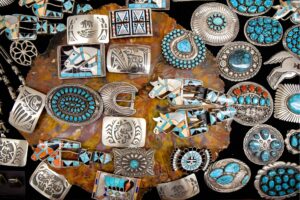
Among the many artistic traditions found within Native American jewelry, Zuni stone inlay occupies a place of exceptional distinction. Its beauty is rarely defined by dramatic scale or bold silverwork alone. Instead, it captures attention through remarkable precision, refined balance, and the extraordinary ability to transform individually shaped pieces of natural stone into seamless artistic compositions. Every finished design reflects countless careful decisions, where accuracy measured in fractions of a millimetre determines whether the completed work achieves true harmony. This pursuit of precision has made Zuni inlay one of the most respected forms of lapidary artistry in the world of handcrafted jewelry.
To appreciate Zuni inlay fully, it is important to look beyond its immediate visual appeal. What often appears effortless is, in reality, the result of exceptional patience, technical discipline, and an unwavering commitment to detail. Every carefully fitted stone contributes to a larger composition where craftsmanship becomes almost invisible, allowing the finished artwork to appear naturally complete rather than mechanically assembled.
Precision Begins Long Before the First Stone Is Set
Exceptional inlay work starts well before the first gemstone is shaped. Every successful composition begins with thoughtful planning that considers proportion, colour relationships, symmetry, movement, and the interaction between individual materials. Rather than selecting stones simply because they are attractive, artisans evaluate how each one will contribute to the finished design. Variations in colour, texture, thickness, and natural character influence every creative decision, ensuring that the composition functions as a unified whole rather than a collection of separate elements.
This careful preparation distinguishes Zuni inlay from decorative techniques that rely primarily upon individual focal stones. Here, every component depends upon every other component. Altering the size or position of a single piece may require adjustments throughout the entire design, making planning as important as execution. The finished jewelry reflects not only technical skill but also remarkable spatial awareness and artistic foresight.
Small Stones Create Extraordinary Visual Impact
One of the defining characteristics of Zuni inlay is the ability to achieve remarkable complexity through numerous carefully shaped pieces of natural material. Turquoise, coral, jet, mother of pearl, shell, lapis lazuli, and other stones are individually prepared before being arranged into patterns that often appear almost effortless. The beauty of the finished design comes not from any single stone but from the visual harmony created when every element fits perfectly beside the next.
Because each component contributes equally to the composition, viewers naturally experience the artwork as a complete image rather than noticing individual pieces. This seamless integration is one of the highest achievements of inlay craftsmanship. It requires extraordinary consistency, because even the smallest gap or irregularity can interrupt the visual rhythm that defines exceptional work.
The Discipline Behind Perfect Alignment
Collectors often admire Zuni inlay for its apparent simplicity, yet simplicity is frequently the result of extraordinary discipline. Every line must remain clean, every edge must meet precisely, and every stone must sit securely within the design while maintaining consistent spacing throughout the composition. Achieving this level of refinement requires patience at every stage of the creative process, as artisans continually evaluate alignment, proportion, and overall balance before considering the work complete.
This discipline also extends to finishing. Polished surfaces, smooth transitions, and carefully refined edges allow the individual materials to appear naturally connected rather than artificially assembled. The absence of distraction enables the viewer to focus entirely on the artistry of the composition, demonstrating how technical excellence often becomes most impressive when it remains almost invisible.
Colour Becomes a Design Tool
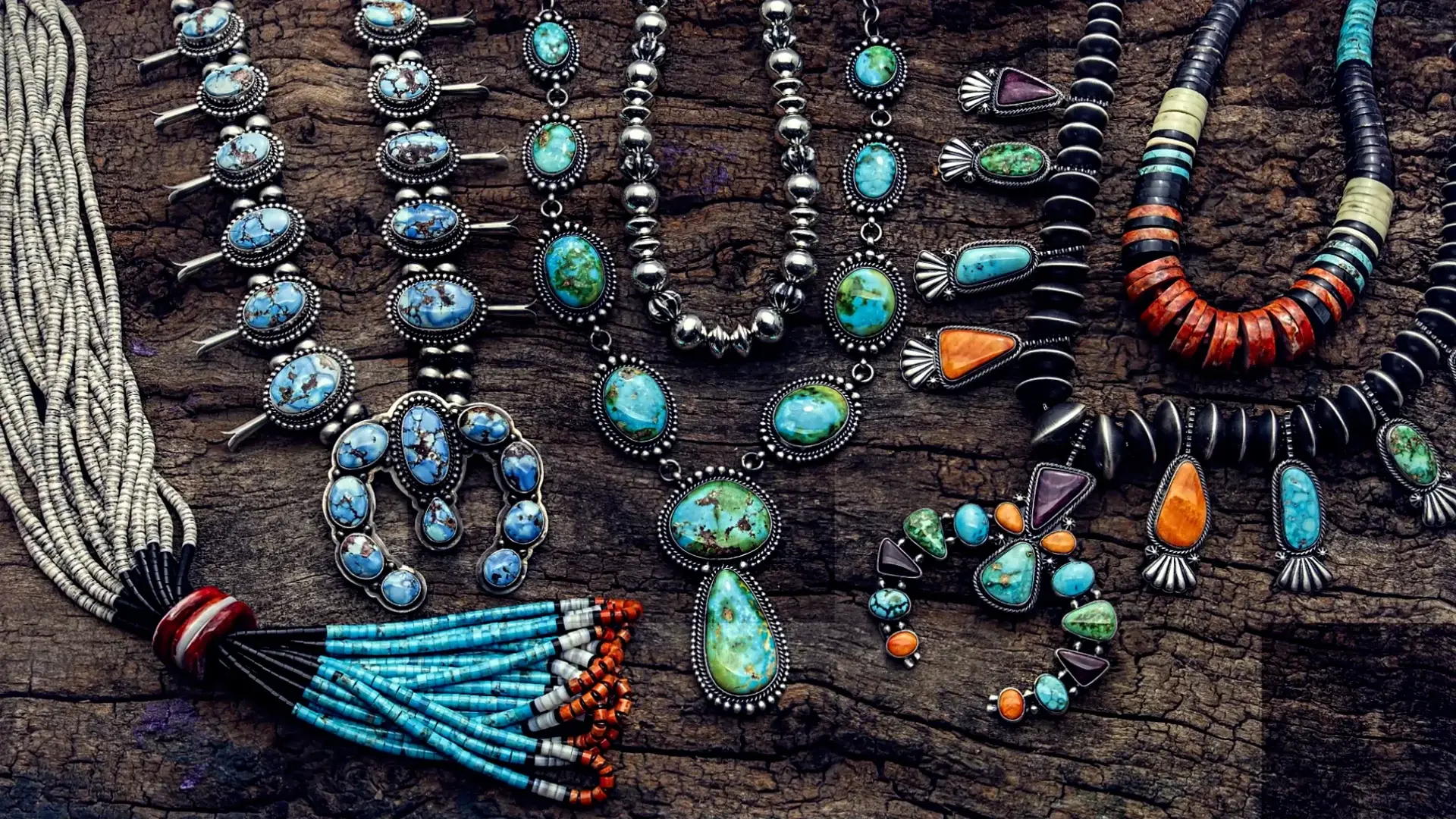
In Zuni inlay, colour is not merely decorative. It functions as an essential element of visual composition. Every shade of turquoise, every piece of coral, every section of jet, and every luminous fragment of shell contributes to the movement, balance, and rhythm of the finished design. Rather than relying upon contrast alone, artisans carefully arrange colours to guide the viewer’s eye naturally across the composition, creating harmony through thoughtful placement instead of visual excess.
Natural materials make this process particularly rewarding because no two pieces are exactly alike. Slight differences in hue, texture, and pattern introduce depth that manufactured materials cannot easily reproduce. The finished jewelry therefore reflects both the individuality of nature and the creative judgement of the artisan who carefully orchestrated every relationship between colour and form.
Why Collectors Hold Zuni Inlay in Such High Regard
Experienced collectors frequently describe outstanding Zuni inlay as craftsmanship that becomes more impressive the longer it is studied. At first glance, the jewellery appears elegant and beautifully balanced. Closer examination reveals extraordinary precision hidden within every joint, transition, and carefully fitted stone. The more time spent observing the work, the greater the appreciation for the technical discipline required to produce such flawless visual continuity.
This lasting ability to reward careful observation explains why Zuni inlay enjoys enduring respect among museums, collectors, and jewellery historians. It demonstrates that artistic excellence is not always measured by dramatic scale or elaborate ornamentation. Sometimes it is revealed through quiet perfection, where every tiny detail contributes to an extraordinary whole.
A Lasting Standard of Artistic Excellence
The influence of Zuni stone inlay extends far beyond individual pieces of jewellery. It represents an artistic philosophy built upon patience, precision, and uncompromising attention to detail. Contemporary artisans continue expanding creative possibilities while preserving the remarkable standards that established Zuni inlay as one of the finest expressions of handcrafted jewellery. Their work reminds us that genuine innovation often grows from mastering the smallest details before pursuing the grandest ideas.
For anyone exploring Native American jewelry, understanding Zuni inlay provides an entirely new way of appreciating craftsmanship. It reveals that extraordinary artistry is not always found in what appears most complicated. Instead, it often lies in the ability to make extraordinary precision appear completely natural, allowing craftsmanship to disappear behind the effortless beauty of the finished work.
Conclusion
Zuni stone inlay represents one of the highest achievements in handcrafted jewelry because it transforms patience, precision, and artistic judgement into seamless visual harmony. Every finished piece reflects countless careful decisions that remain largely invisible, yet together create designs admired throughout the world for their elegance and technical excellence.
The more closely one studies Zuni inlay, the more remarkable it becomes. Beyond every perfectly fitted stone lies an extraordinary commitment to craftsmanship that continues to inspire collectors, artists, museums, and admirers of Native American jewelry. It stands as a lasting reminder that true mastery is often revealed not through excess, but through the quiet perfection of every carefully considered detail.