Understanding Hopi Overlay: A Technique That Changed Silver Art
Among the many artistic techniques found in Native American jewelry, few are as instantly recognizable or as technically refined as Hopi overlay silverwork. At first glance, its clean lines, striking contrasts, and carefully balanced compositions appear remarkably simple. Closer examination, however, reveals an extraordinary level of planning, precision, and craftsmanship hidden beneath every finished surface. Unlike decorative methods that rely primarily on added ornamentation, overlay creates visual depth by building one carefully designed layer of silver upon another, allowing light, shadow, texture, and negative space to become essential elements of the composition.
This distinctive approach has earned widespread admiration because it demonstrates how restraint can produce remarkable artistic impact. Rather than overwhelming the viewer with elaborate decoration, Hopi overlay invites careful observation. Every line has purpose, every opening contributes to the design, and every surface has been considered as part of a unified artistic composition. Learning to recognize these qualities allows collectors to appreciate why Hopi overlay remains one of the most respected achievements in Native American silversmithing.
Looking Beyond the Surface
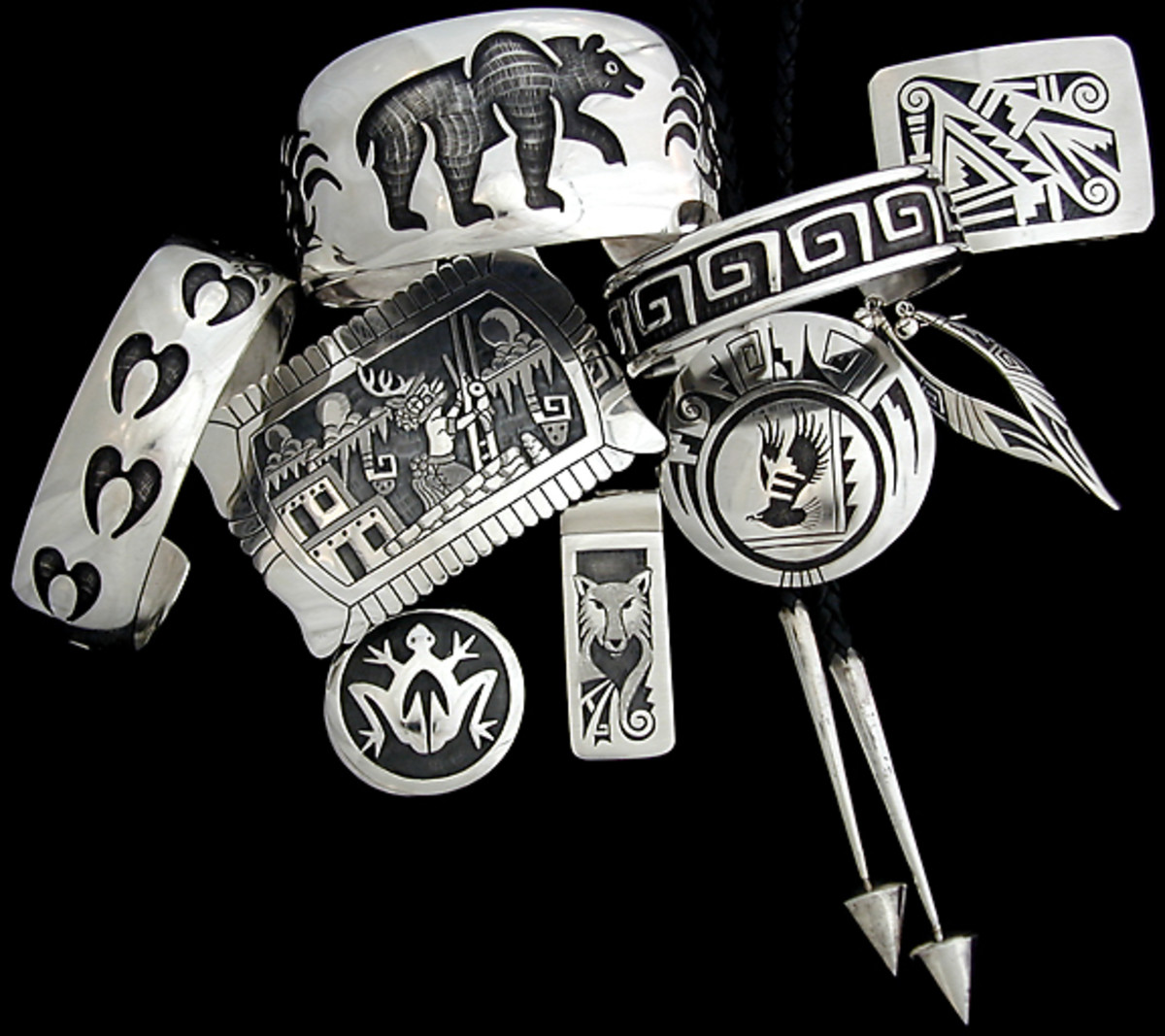
One of the defining characteristics of Hopi overlay is that much of its craftsmanship remains hidden beneath the finished design. What appears to be a single sheet of decorated silver is actually the result of multiple carefully prepared layers working together to create visual depth. The upper layer carries the primary artistic composition, while the lower layer provides contrast that allows every line, shape, and pattern to stand out with remarkable clarity.
This layered construction changes the way the eye experiences the jewelry. Instead of relying on raised ornamentation alone, the design creates movement through the relationship between light and shadow. As lighting conditions change, the artwork appears to shift subtly, revealing details that may remain unnoticed during a quick glance. This dynamic quality encourages slow observation, rewarding viewers who take the time to study the craftsmanship closely.
Precision Is the Signature of Overlay Silverwork
Creating successful overlay requires extraordinary accuracy because every stage of the design depends upon precise planning. The upper silver layer must align perfectly with the foundation beneath it, while every cut, opening, and edge contributes directly to the final composition. Even the smallest inconsistency can interrupt the visual balance that gives overlay its distinctive elegance.
For this reason, experienced collectors often examine overlay work at close range. Clean edges, consistent spacing, smooth transitions, and refined finishing demonstrate the confidence of the artisan and the discipline required to produce such intricate work. Although the finished jewelry often appears calm and effortless, achieving that level of simplicity demands exceptional technical control throughout the creative process.
The Artistic Power of Light, Shadow, and Space
Unlike many decorative techniques that build visual interest by adding more elements, Hopi overlay achieves much of its beauty by carefully controlling what is left behind. Open spaces, recessed surfaces, and textured backgrounds become active parts of the design rather than empty areas between decorative details. This thoughtful use of negative space creates strong visual rhythm while allowing every motif to breathe naturally within the composition.
Light plays an equally important role. Polished silver reflects brightness across the raised surface, while darker recessed areas create contrast that strengthens the overall design. The result is artwork that changes subtly as it is viewed from different angles, giving the jewelry an unusual sense of depth despite its relatively flat construction. This sophisticated interaction between silver, light, and shadow explains why overlay continues to captivate both collectors and designers.
A Distinctive Artistic Language
Hopi overlay is admired not only because of its technical difficulty but because it communicates through a unique visual language. Rather than filling every available surface, artisans often emphasize clarity, proportion, and thoughtful composition. Repeating geometric forms, flowing lines, carefully balanced symmetry, and deliberate spacing allow every design to feel intentional without becoming visually crowded.
This disciplined approach demonstrates that complexity is not always measured by the number of decorative elements. Sometimes the greatest artistic achievement lies in knowing what to leave out. The ability to create powerful visual impact through carefully controlled composition has become one of the defining qualities that distinguishes Hopi overlay from many other silversmithing techniques.
Why Collectors Hold Overlay in Such High Regard
Collectors frequently describe Hopi overlay as jewelry that rewards patience. Its beauty is rarely exhausted during the first viewing because closer examination continually reveals new details. Tiny refinements in line quality, balanced proportions, subtle texturing, and carefully engineered transitions become increasingly apparent as knowledge develops. This ability to sustain long term appreciation makes overlay particularly rewarding for enthusiasts who enjoy studying craftsmanship in depth.
Another reason for its enduring reputation is originality. Every artisan interprets the technique differently, ensuring that no two pieces communicate exactly the same artistic vision. Although shared principles connect the tradition, individual creativity remains central to every finished work. This combination of technical discipline and artistic freedom continues to make Hopi overlay one of the most admired forms of Native American silverwork.
Appreciating Overlay Through an Artist’s Eyes
The finest way to understand Hopi overlay is to look beyond the finished object and imagine the creative decisions behind it. Every line required planning before it was cut. Every area of contrast was carefully considered. Every polished surface and recessed background was designed to guide the viewer’s eye through the composition with quiet confidence. What appears effortless in the finished jewelry is actually the result of extraordinary patience, technical mastery, and artistic judgement.
Viewing overlay from this perspective transforms appreciation. Rather than seeing only decorative silverwork, collectors begin recognizing a carefully orchestrated conversation between craftsmanship, design, light, and space. That understanding explains why Hopi overlay continues to be celebrated not simply as a technique, but as one of the most refined artistic expressions in the history of Native American jewelry.
Conclusion
Hopi overlay demonstrates that exceptional artistry is often achieved through precision rather than excess. Its layered construction, disciplined compositions, and remarkable use of light and shadow have established a visual language unlike any other in Native American jewelry. Every completed piece reflects countless thoughtful decisions that remain largely invisible to casual observers yet become increasingly apparent through careful study.
The more one understands Hopi overlay, the easier it becomes to appreciate why it has earned such lasting admiration among collectors, museums, artists, and historians. It is far more than a method of working with silver. It is a sophisticated artistic tradition that continues to show how technical excellence and creative vision can come together to produce jewelry of extraordinary beauty and enduring significance.