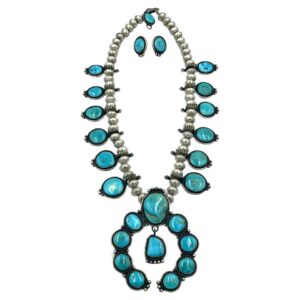
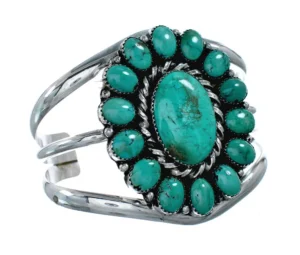
Long before a silversmith begins shaping sterling silver or a lapidary artist cuts the first gemstone, the creative process has already begun within the natural world. Millions of years of geological activity, mineral formation, marine ecosystems, and environmental change produce the materials that eventually become part of Native American jewelry. Every turquoise cabochon, coral branch, shell, or gemstone carries a history that predates human craftsmanship by countless generations. Rather than viewing these materials simply as decorative components, Native American artisans have long appreciated their natural individuality, allowing each stone, shell, or mineral to influence the final design rather than forcing every creation into a standardized pattern.
This close relationship between craftsmanship and nature remains one of the defining characteristics of Native American jewelry. Artisans work with materials that possess naturally occurring colors, textures, patterns, and structural qualities that cannot be manufactured or perfectly duplicated. The individuality found within these natural resources ensures that every handcrafted piece possesses its own personality, allowing collectors to appreciate not only the skill of the artisan but also the remarkable diversity created by the natural world itself.
Understanding the Materials That Shape Southwestern Jewelry
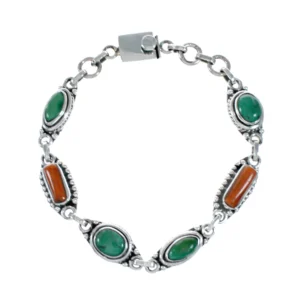
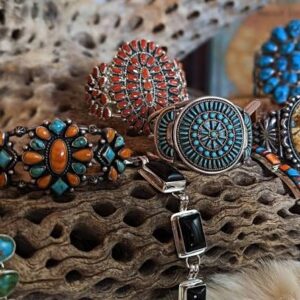
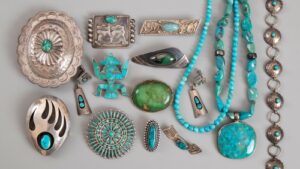
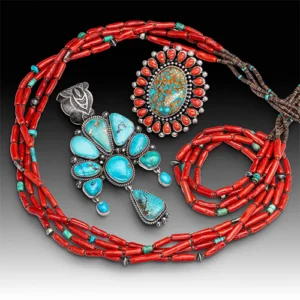
Although turquoise has become the gemstone most closely associated with Native American jewelry, it represents only one part of a much broader artistic palette. Coral contributes vibrant reds and warm oranges that create striking contrast against sterling silver. Spiny oyster shell introduces brilliant shades of orange, purple, burgundy, and white that expand the expressive possibilities of handcrafted jewelry. Jet provides dramatic depth through its rich black appearance, while mother of pearl offers luminous iridescence that changes gently under shifting light. Lapis lazuli, sugilite, onyx, serpentine, shell, and other natural materials further enrich the diversity of Southwestern jewelry by introducing distinctive colors, textures, and visual characteristics that allow every artisan to develop an individual artistic voice.
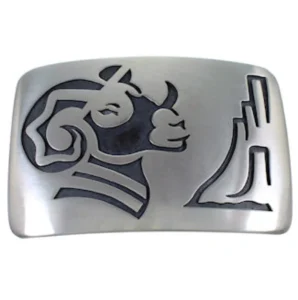
Sterling silver remains the unifying element that brings these diverse materials together. Its strength, versatility, and workability enable silversmiths to construct settings that protect delicate gemstones while enhancing their natural beauty. Through engraving, hand stamping, repoussé, overlay, bezel construction, oxidation, and careful finishing, sterling silver provides the architectural framework that allows each natural material to become part of a balanced artistic composition. The relationship between silver and gemstone is therefore one of partnership rather than competition, with each material enhancing the strengths of the other.
Why No Two Natural Stones Are Ever Exactly Alike
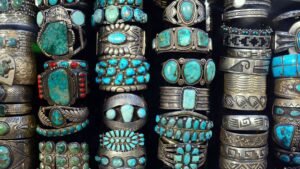
One of the most remarkable characteristics of natural gemstones is their individuality. Every stone forms under unique environmental conditions, resulting in subtle differences in color, mineral composition, matrix, transparency, texture, and internal structure. Turquoise may display brilliant sky-blue tones or rich green hues accented by intricate spiderweb matrix. Coral varies in color saturation and organic texture. Spiny oyster shell presents dramatic transitions between orange, crimson, purple, and cream. Even gemstones originating from the same general source can differ significantly, making every handcrafted piece of jewelry naturally distinctive before the artisan begins shaping the material.
These natural variations are highly valued because they reinforce the authenticity of handcrafted jewelry. Rather than expecting identical appearance across every design, experienced collectors often appreciate the subtle differences that reveal the individuality of each material. Understanding this principle helps buyers recognize that variation is not a flaw but one of the defining qualities that makes natural materials so desirable within Native American jewelry.
Selecting Materials Is Part of the Artisan’s Craft
The creation of exceptional jewelry begins with thoughtful material selection. Experienced artisans evaluate far more than visual appearance when choosing stones or shell for a design. They consider durability, proportion, structural stability, color harmony, natural patterning, and how each material will interact with sterling silver throughout the finished composition. A beautifully balanced piece often reflects countless creative decisions made long before fabrication begins, demonstrating that craftsmanship starts with careful observation rather than simply skilled tool work.
Once selected, every material must be prepared according to its unique characteristics. Hard gemstones require different cutting and polishing techniques than organic materials such as coral or shell. Silver settings must be carefully engineered to support the material without placing unnecessary stress upon it, while decorative details are adjusted to complement rather than overwhelm the natural beauty of the stone. This careful balance between technical knowledge and artistic judgment distinguishes handcrafted Native American jewelry from mass-produced alternatives.
Caring for the Natural Beauty of Handcrafted Jewelry
Natural materials reward thoughtful care. Although sterling silver is highly durable, gemstones and organic materials vary considerably in hardness, stability, and sensitivity to environmental conditions. Gentle cleaning, appropriate storage, protection from harsh chemicals, and careful handling all contribute to preserving the beauty of handcrafted jewelry for future generations. Understanding these basic principles helps owners protect both the appearance and structural integrity of their collections while respecting the natural materials that make every piece unique.
Proper care also encourages a deeper appreciation for craftsmanship. Jewelry created from genuine natural materials is intended to be enjoyed, worn, and preserved rather than treated as disposable fashion. By understanding the characteristics of different gemstones and organic materials, collectors develop greater confidence in maintaining their jewelry while ensuring that its artistic value continues to be appreciated over time.
Appreciating Nature Through the Art of Jewelry
Every remarkable piece of Native American jewelry represents a collaboration between nature and human creativity. The earth provides turquoise, lapis lazuli, and other minerals. Marine environments contribute coral, shell, and spiny oyster. Skilled artisans then transform these remarkable materials through generations of silversmithing knowledge into jewelry that celebrates both natural beauty and exceptional craftsmanship. Neither element alone could achieve the same result; it is their partnership that gives Native American jewelry its distinctive identity.
As you continue exploring our Learning Center, you’ll discover detailed guides devoted to individual gemstones, traditional silversmithing techniques, authenticity, collecting, and jewelry care. Together, these resources reveal how the thoughtful selection and respectful use of natural materials have shaped one of the world’s most admired traditions of handcrafted jewelry, allowing every finished piece to tell a story that begins in nature and is completed by the hands of an artisan.