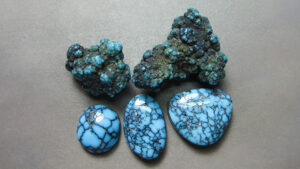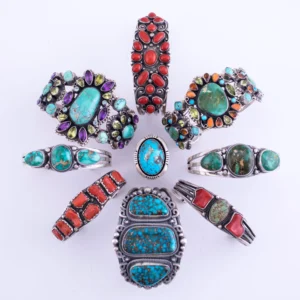
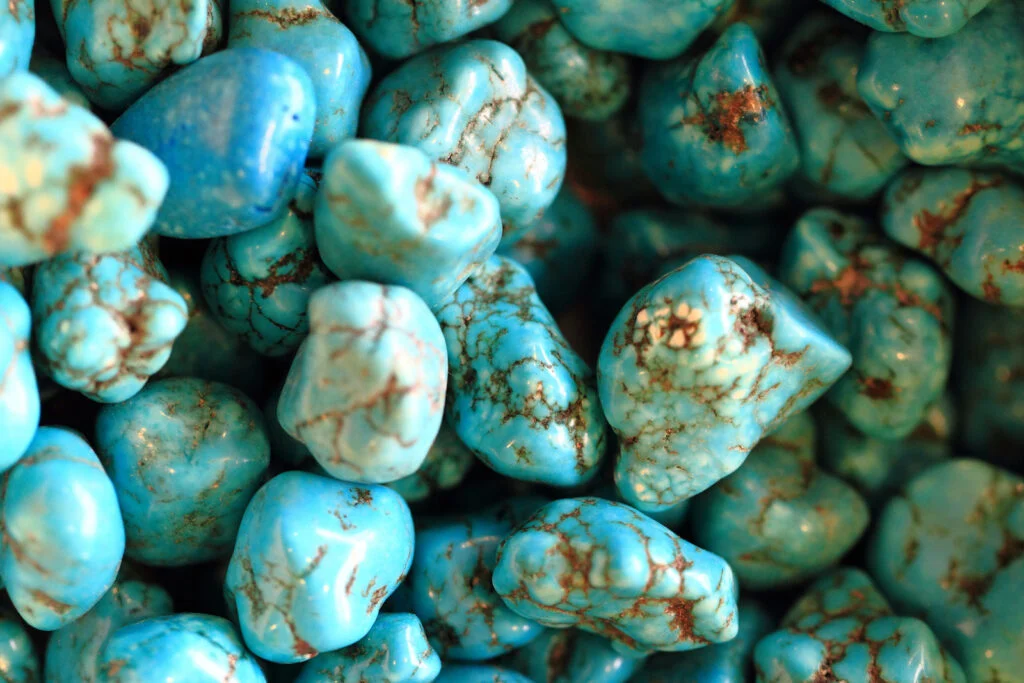
One of the most captivating qualities of natural turquoise is its remarkable range of colour. While many people immediately associate turquoise with vivid sky blue, the gemstone exists in an impressive spectrum that includes robin’s egg blue, deep blue, blue green, vibrant green, soft sage, and numerous intermediate shades. This diversity is not the result of artificial colouring or inconsistency. It is the natural outcome of geological conditions that developed over millions of years beneath the earth’s surface. Every variation tells a unique story, making colour one of the most fascinating aspects of collecting and appreciating turquoise.
For artisans, these natural colour differences are not limitations but opportunities. Every shade introduces a different mood, allowing designers to create jewelry with distinctive personalities while celebrating the individuality of each gemstone. Understanding why these colours occur enriches the appreciation of Native American jewelry because it reveals how nature and craftsmanship work together to produce extraordinary works of wearable art.
Colour Begins Deep Within the Earth
The appearance of turquoise is determined long before it reaches an artisan’s workbench. As the gemstone forms, its chemical composition and the surrounding minerals influence the colours that gradually develop within the stone. Even deposits located relatively close to one another can produce noticeably different shades because the geological environments in which they formed were never exactly the same.
This natural process explains why no universal colour standard exists for turquoise. Instead of expecting every stone to display identical tones, knowledgeable collectors appreciate the remarkable diversity created by nature itself. Each variation reflects a unique geological history, making colour an authentic characteristic rather than something that must conform to a single ideal.
Blue Turquoise Has Become the Most Recognised
When people picture turquoise, they often imagine clear blue stones with vibrant, even colour. These shades have become widely recognised because of their striking visual impact and the beautiful contrast they create against polished sterling silver. Bright blue turquoise naturally draws the eye, making it a popular choice for bracelets, pendants, rings, necklaces, and statement pieces where the gemstone serves as the focal point of the composition.
However, the popularity of blue turquoise should not be mistaken for superiority. Its widespread recognition simply reflects its visual appeal and historical prominence within Native American jewelry. Many experienced collectors value a broad range of colours, recognising that beauty cannot be defined by one shade alone.
Green Turquoise Offers a Distinctive Character
Green turquoise possesses an entirely different personality. Its softer, earth inspired tones create jewelry that feels warm, organic, and visually rich. Depending on its mineral composition, green turquoise may range from delicate sage to vibrant forest hues, each offering unique artistic possibilities. These colours often pair beautifully with both polished and oxidised sterling silver, allowing artisans to create designs that communicate elegance through subtlety rather than intensity.
Collectors frequently appreciate green turquoise because it demonstrates the gemstone’s remarkable versatility. Rather than competing with blue varieties, it expands the creative language available to silversmiths. The result is jewelry that feels distinctive while remaining unmistakably rooted in the traditions of Native American craftsmanship.
Nature Creates Every Shade Between Blue and Green
Perhaps the most fascinating turquoise is found between the two extremes. Many stones display graceful transitions where blue gradually blends into green, creating colour combinations that appear almost painterly. Others contain subtle shifts in tone that become visible only under changing light. These intermediate shades remind us that nature rarely works in absolute categories. Instead, it produces continuous variation that makes every gemstone visually unique.
For artisans, these blended colours inspire thoughtful design decisions. The surrounding silverwork must complement rather than compete with the stone, allowing its natural transitions to remain the centre of attention. Successful compositions highlight these variations instead of attempting to disguise them, creating jewelry that feels balanced, harmonious, and authentic.
Colour Is Only One Part of Beauty
Although colour naturally attracts immediate attention, experienced collectors understand that it represents only one aspect of a gemstone’s overall character. Saturation, consistency, natural matrix, surface quality, proportion, and the relationship between the stone and the surrounding craftsmanship all contribute to the finished appearance. A beautifully designed piece featuring softly coloured turquoise may possess greater artistic impact than a more vivid stone placed within an unbalanced composition.
This broader perspective changes the way turquoise is evaluated. Rather than asking which colour is best, collectors begin asking how effectively the gemstone contributes to the overall design. The answer depends upon artistic harmony rather than colour alone.
Appreciating Diversity Instead of Ranking Colours
One of the most rewarding lessons for new collectors is discovering that turquoise does not need to fit a single standard to be beautiful. Blue, green, and every variation between them exist because nature creates gemstones through countless combinations of minerals and geological conditions. These differences are not flaws to be corrected but qualities to be appreciated. They ensure that every handcrafted piece carries its own visual identity while encouraging artisans to develop original compositions inspired by the individual character of each stone.
This appreciation for diversity has become one of the defining strengths of Native American jewelry. Instead of seeking perfect uniformity, artists and collectors celebrate natural variation as evidence of authenticity, creativity, and the remarkable unpredictability of the natural world.
Conclusion
The extraordinary colours of natural turquoise are among the reasons it remains the signature gemstone of Native American jewelry. From brilliant blues to rich greens and every subtle transition between them, each stone reflects geological processes that cannot be repeated or replicated. These natural differences provide artisans with endless creative possibilities while ensuring that every handcrafted piece possesses its own unmistakable personality.
Understanding turquoise colour is about far more than recognising different shades. It is about appreciating how nature creates individuality and how skilled artisans transform that individuality into jewelry that continues inspiring collectors around the world. Every colour tells its own story, and together they reveal why turquoise remains one of the most celebrated gemstones in the history of handcrafted art.