Why Turquoise Became the Signature Stone of Native American Jewelry
Among the many natural materials used in handcrafted Native American jewelry, none has earned greater recognition than turquoise. Its unmistakable shades of blue and green have captivated artists, collectors, historians, and jewelry enthusiasts for generations, making it the gemstone most closely associated with Native American silversmithing. Yet its reputation extends far beyond its striking appearance. Turquoise became the defining stone of Native American jewelry because it offers an extraordinary combination of visual character, creative versatility, durability, and individuality. Every stone possesses features that cannot be duplicated, allowing artisans to create jewelry that is as distinctive as the natural material itself.
Although turquoise is often the first gemstone people notice, experienced collectors understand that its importance cannot be explained by colour alone. Its relationship with sterling silver, its remarkable natural variation, and its ability to complement countless artistic styles have established turquoise as the cornerstone of one of the world’s most admired jewelry traditions. Appreciating why it occupies this position provides a deeper understanding of both the gemstone and the craftsmanship that brings it to life.
A Gemstone That Nature Never Repeats
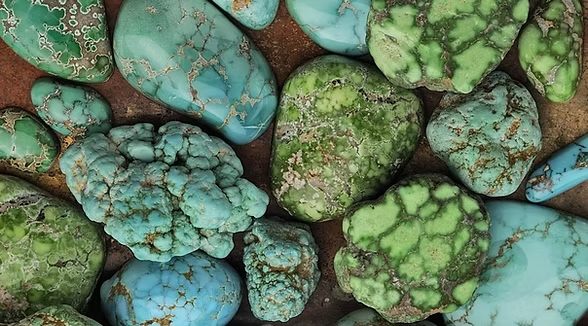
One of turquoise’s greatest qualities is its individuality. Unlike manufactured materials designed to appear identical, every natural turquoise stone develops under unique geological conditions over millions of years. Variations in mineral composition, surrounding rock, and environmental influences produce differences in colour, texture, matrix, and surface character that ensure no two stones are ever exactly alike. This natural diversity gives artisans an endless source of creative inspiration because every gemstone presents new possibilities for design.
Collectors often find that this individuality strengthens their connection to handcrafted jewelry. Rather than searching for perfect uniformity, they appreciate the subtle differences that distinguish one bracelet, pendant, necklace, or ring from another. These natural characteristics become part of the jewelry’s identity, reinforcing the idea that every finished piece is genuinely one of a kind.
The Perfect Companion to Sterling Silver
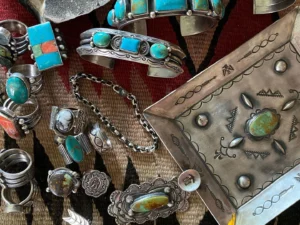
Few gemstones complement sterling silver as naturally as turquoise. The cool brilliance of polished silver enhances the gemstone’s vibrant colours, while turquoise introduces warmth, movement, and visual depth that prevent the composition from feeling overly formal. This relationship creates an elegant balance where neither material dominates the other. Instead, silver provides structure and definition, while turquoise becomes the visual centre that draws the eye into the design.
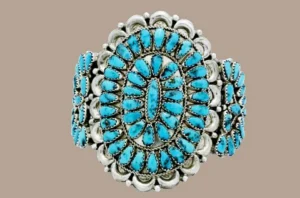
This harmony has allowed generations of artisans to explore an extraordinary range of artistic styles. A single turquoise stone can become the focal point of a minimalist pendant, while multiple carefully selected stones can create dramatic bracelets, necklaces, or squash blossom designs. Regardless of complexity, the relationship between silver and turquoise remains one of the defining characteristics of Native American jewelry.
Colour That Captures Immediate Attention
The remarkable colour palette of natural turquoise is one of the primary reasons it has remained so admired throughout history. Soft sky blues, vivid robin’s egg tones, deep ocean blues, gentle greens, and countless subtle variations give artisans an extraordinary range of visual possibilities. These colours possess a natural richness that immediately captures attention while remaining elegant enough to complement both contemporary and traditional jewelry designs.
Importantly, collectors have come to appreciate that there is no single “correct” shade of turquoise. Every colour tells its own story, reflecting the unique conditions under which the stone formed. This diversity encourages appreciation rather than comparison, allowing each gemstone to be valued for its individual beauty instead of how closely it resembles another.
A Material That Encourages Artistic Freedom
Turquoise offers exceptional creative flexibility because of its natural variation in shape, size, colour, and character. Some stones inspire bold statement pieces with expansive silver settings, while others encourage delicate compositions that highlight refined craftsmanship through restraint. Rather than forcing every design into a predetermined pattern, artisans often allow the gemstone itself to influence the direction of the finished work.
This collaborative relationship between artist and material distinguishes handcrafted Native American jewelry from mass produced alternatives. The artisan responds to the unique qualities of each stone instead of treating every gemstone as interchangeable. As a result, turquoise does not simply decorate the jewelry. It actively shapes its artistic identity from the earliest stages of the creative process.
Collectors Value Character More Than Perfection
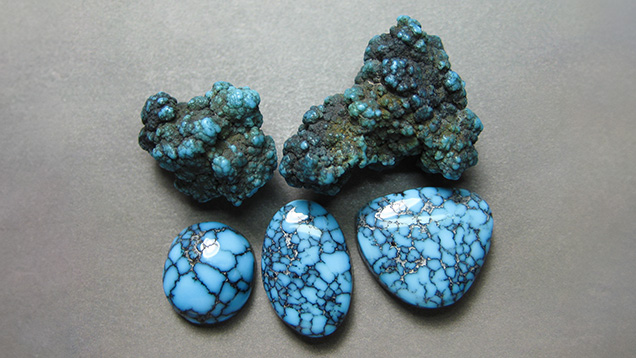
New collectors are sometimes surprised to learn that many of the qualities admired in natural turquoise are the very features that make every stone different. Matrix patterns, subtle colour transitions, natural inclusions, and organic variations are often celebrated because they demonstrate authenticity and individuality rather than imperfection. These characteristics remind us that turquoise is a product of nature, not a manufactured material designed to eliminate variation.
As collecting experience grows, appreciation often shifts away from searching for flawless appearance toward recognising distinctive personality. A stone with remarkable matrix or an unusual colour combination may become far more memorable than one displaying complete uniformity. This perspective reflects a broader appreciation for natural beauty and explains why handcrafted Native American jewelry continues rewarding careful observation.
Why Turquoise Remains the Defining Gemstone
Many beautiful gemstones have found a place within Native American jewelry, yet turquoise continues to occupy a position unlike any other. It combines remarkable natural beauty with artistic versatility, complements sterling silver with exceptional harmony, and provides endless opportunities for creative expression through its unique colours and patterns. Few materials offer artisans such a rich balance of individuality and visual impact while remaining instantly recognisable across generations of craftsmanship.
Its lasting significance also reflects the relationship between nature and artistry. Every piece of turquoise begins as a geological creation shaped over immense periods of time before eventually becoming part of a handcrafted work of art. This journey from the earth to the artisan’s bench gives the gemstone a character that extends far beyond appearance alone, making it one of the most meaningful materials in Native American jewelry.
Conclusion
Turquoise became the signature stone of Native American jewelry because it offers far more than remarkable colour. Its individuality, compatibility with sterling silver, natural character, and extraordinary artistic versatility have allowed generations of artisans to transform it into jewelry that continues inspiring collectors throughout the world. Every stone contributes its own personality, ensuring that no two handcrafted creations ever tell exactly the same visual story.
Understanding the significance of turquoise changes the way Native American jewelry is appreciated. It becomes clear that the gemstone is not simply an attractive addition to a design. It is a creative partner that influences composition, defines artistic expression, and helps preserve one of the world’s most respected traditions of handcrafted jewelry.