Few topics generate more discussion among turquoise enthusiasts than the differences between natural, stabilized, and treated turquoise. These terms appear regularly in jewelry descriptions, yet they are often misunderstood or presented without enough context. For collectors, understanding these distinctions is valuable not because one category automatically surpasses another, but because knowledge encourages informed appreciation and realistic expectations. Every gemstone has its own journey before becoming part of a handcrafted piece of jewelry.
The conversation should also remain balanced. Exceptional Native American jewelry is the result of many elements working together, including craftsmanship, design, material selection, and artistic execution. The condition of the turquoise is one part of that story, but it should never be viewed in isolation from the quality of the finished work.
Natural Turquoise Represents the Stone in Its Original State
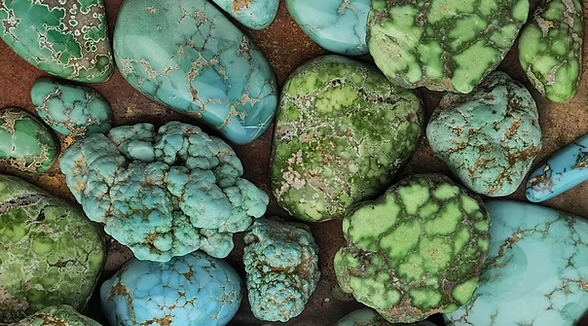
Natural turquoise refers to material that has not been strengthened through stabilization. After being extracted, shaped, and polished, the stone retains the characteristics created by nature over millions of years. Its colour, matrix, texture, and internal structure remain the product of geological formation rather than artificial enhancement. Many collectors appreciate natural turquoise because it preserves the gemstone’s original identity and reflects the remarkable diversity found in nature.
It is important to understand, however, that natural turquoise exists in a wide range of hardness and durability. Some deposits naturally produce exceptionally strong material, while others yield softer stones that require greater care during everyday wear. Natural does not automatically mean flawless or indestructible. Like all gemstones, each specimen should be appreciated for its own individual qualities rather than judged solely by its category.
Stabilized Turquoise Enhances Durability
Stabilization is a widely accepted process used to strengthen turquoise that might otherwise be too porous or fragile for long term use in jewelry. During this process, the stone is infused with a clear stabilizing material that reinforces its internal structure while preserving its natural appearance. The goal is not to change the character of the gemstone but to improve its durability so it can withstand regular wear more effectively.
Many beautiful pieces of Native American jewelry feature stabilized turquoise because it allows artisans to work confidently with material that would otherwise be unsuitable for everyday use. When disclosed honestly, stabilized turquoise provides collectors with an attractive combination of natural beauty and practical resilience. Its widespread use reflects a commitment to preserving the appearance of genuine turquoise while improving its performance as wearable art.
Understanding Treated Turquoise
The term “treated turquoise” covers a broad range of processes, making it important not to assume that every treatment has the same purpose or effect. Some treatments are intended to improve colour consistency, while others may alter the surface appearance or enhance stability. Because these methods vary considerably, transparency from the seller remains essential so collectors understand exactly what they are purchasing.
Responsible disclosure builds confidence between artisans, retailers, and collectors. Rather than viewing treatment as inherently positive or negative, experienced buyers focus on accurate representation. A well described gemstone allows the craftsmanship and artistic quality of the jewelry to be appreciated without uncertainty or misunderstanding.
Why Honest Information Matters
Knowledgeable collectors recognise that trust is one of the most valuable qualities in the jewelry world. Accurate descriptions of gemstones allow buyers to make informed decisions based on their own preferences, collecting goals, and intended use. Whether someone prefers natural turquoise, stabilized material, or another responsibly disclosed option, confidence begins with clear and honest communication rather than assumptions.
This emphasis on transparency also benefits the broader appreciation of Native American jewelry. When gemstones are represented accurately, attention naturally returns to the artistry, craftsmanship, and creative vision that define exceptional handcrafted work. The conversation becomes one of education rather than confusion, strengthening long term trust within the collecting community.
Appreciating the Jewelry as a Whole
While gemstone classification is important, it should never overshadow the complete artistic achievement of a handcrafted piece. Outstanding jewelry is created through thoughtful design, balanced proportions, refined silverwork, careful stone selection, and exceptional craftsmanship. A beautifully executed pendant or bracelet reflects the skill of the artisan far beyond the classification of the turquoise it contains.
Experienced collectors often evaluate jewelry holistically. They consider how successfully the gemstone interacts with the silver, how comfortably the piece is constructed, how confidently the design has been executed, and whether every element contributes to a harmonious composition. These qualities ultimately determine whether a piece becomes memorable, admired, and treasured over time.
Conclusion
Understanding the differences between natural, stabilized, and treated turquoise allows collectors to appreciate Native American jewelry with greater confidence and clarity. Each category has its place within the world of handcrafted jewelry, provided it is represented honestly and understood within its proper context. Knowledge replaces assumption, making every purchasing or collecting decision more informed.
Perhaps the most valuable lesson is that remarkable jewelry cannot be defined by a single characteristic. True excellence emerges when exceptional craftsmanship, thoughtful design, authentic materials, and artistic integrity come together. When these qualities are present, the finished piece becomes far more than the sum of its individual components, reflecting the enduring creativity that has made Native American jewelry admired throughout the world.