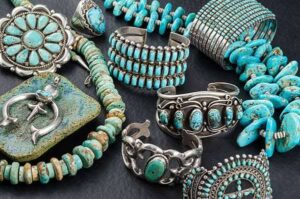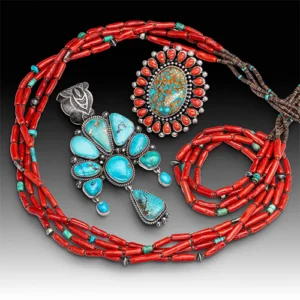
Cleaning Native American jewelry should never be approached as an attempt to make every piece appear brand new. Authentic handcrafted jewelry develops its own character over time, and the objective of proper cleaning is to preserve that character while removing everyday dust, oils, fingerprints, and surface residue that naturally accumulate during wear. Every bracelet, ring, pendant, necklace, pair of earrings, and concho belt represents a careful balance between sterling silver and natural gemstones, meaning that cleaning methods must respect every component rather than focusing on the silver alone. A thoughtful approach protects both the appearance of the jewelry and the craftsmanship that gives it lasting artistic value.
Many cases of unnecessary damage occur not because jewelry was neglected, but because it was cleaned too aggressively. Abrasive materials, harsh chemicals, inappropriate commercial cleaners, or excessive polishing can gradually wear away carefully finished silver surfaces, soften decorative details, or expose natural gemstones to substances that are unsuitable for their unique properties. Understanding how to clean handcrafted jewelry correctly allows collectors to preserve its original beauty while avoiding unnecessary intervention that may compromise its long-term condition.
Begin With the Least Aggressive Method
The safest approach to jewelry care is also the simplest. In most situations, Native American jewelry requires only gentle routine maintenance rather than intensive cleaning. A clean, soft microfiber cloth or a high quality polishing cloth designed specifically for sterling silver is often sufficient to remove fingerprints, light surface oils, and everyday residue. Frequent gentle cleaning prevents heavier build-up from developing, allowing collectors to maintain the jewelry’s appearance without resorting to more aggressive methods later.
This philosophy of minimal intervention reflects the same discipline found in museum conservation practices. Instead of repeatedly polishing silver to achieve an unnaturally bright finish, the emphasis remains on preserving original craftsmanship while maintaining the jewelry in excellent condition. Every cleaning session should remove only what is necessary, leaving decorative details, intentional oxidation, and the artisan’s finishing techniques untouched.
Understand That Silver and Gemstones Have Different Needs
One of the most common mistakes is assuming that every part of the jewelry should be cleaned in exactly the same manner. Sterling silver and natural gemstones respond very differently to cleaning products and environmental conditions. While certain silver polishing methods may be appropriate for exposed metal surfaces, those same products may not be suitable for porous gemstones such as turquoise or coral, or for delicate natural materials including jet, shell, or lapis lazuli.
Collectors should therefore approach every piece as a complete work of art rather than a collection of separate materials. Before using any cleaning product, consider how it may interact not only with the silver but also with every gemstone incorporated into the design. This broader perspective protects the harmony of the entire piece while ensuring that no single component is improved at the expense of another.
Avoid Household Cleaning Products and Abrasive Materials
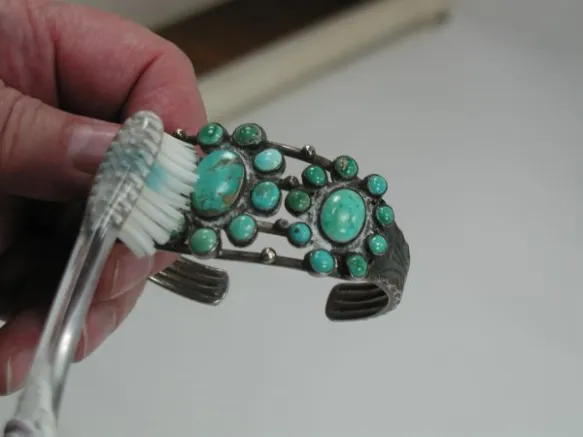
Many everyday cleaning products are designed for household surfaces rather than fine handcrafted jewelry. Chemical cleaners, bleach, ammonia-based solutions, abrasive powders, rough cloths, stiff brushes, and scouring materials may appear effective initially, but they often create microscopic scratches, remove carefully applied finishes, or leave residues that gradually affect natural gemstones. Even products marketed for general jewelry cleaning may not be appropriate for every combination of sterling silver and natural materials.
Equally important is resisting the temptation to polish jewelry excessively. Every polishing process removes an extremely small amount of material. While this may be insignificant on a single occasion, repeated unnecessary polishing over many years can gradually soften engraved details, decorative stamp work, and other handcrafted features that define the artistic identity of the piece. Preservation should always take priority over excessive brightness.
Know When Less Cleaning Is Better
One of the greatest misconceptions among collectors is that jewelry should always appear highly polished. In reality, slight signs of natural ageing often contribute to the visual richness of handcrafted Native American jewelry. Many artisans intentionally incorporate oxidised details to emphasise engraved lines, stamped designs, and dimensional silverwork. Removing these carefully planned contrasts through excessive polishing can unintentionally diminish the artistic depth originally created by the silversmith.
Experienced collectors therefore learn to distinguish between ordinary surface residue and natural patina. Fingerprints, dust, and accumulated oils should be removed as part of regular maintenance, while decorative oxidation and subtle ageing should generally be respected as part of the jewelry’s intended appearance. Understanding this distinction allows cleaning to support the artistry rather than unintentionally altering it.
Professional Cleaning Has Its Place
Although routine care can be performed safely at home, certain situations deserve professional attention. Jewelry that contains loose gemstones, damaged bezels, significant tarnish, structural wear, or valuable vintage craftsmanship should not be subjected to aggressive cleaning without proper evaluation. A qualified professional can assess the condition of the piece, determine the safest treatment, and perform any necessary maintenance while preserving its artistic and historical integrity.
Seeking professional assistance should never be viewed as a last resort. On the contrary, preventative servicing often protects jewelry before problems become serious. Collectors who recognise the limits of routine home care help preserve exceptional craftsmanship while reducing the likelihood of more extensive repairs in the future.
Cleaning Is an Act of Preservation
Perhaps the most important principle to remember is that cleaning is not about changing the jewelry. It is about preserving the remarkable condition in which it already exists. Every careful movement of the polishing cloth, every thoughtful decision to avoid unnecessary chemicals, and every moment spent inspecting the piece contributes to its long-term preservation. These routines also create opportunities to notice loose settings, worn clasps, or other small concerns before they develop into more significant issues.
Viewed in this way, cleaning becomes an extension of collecting itself. It encourages collectors to spend time appreciating craftsmanship, studying natural gemstones, and maintaining a close connection with every piece in their collection. Rather than being a routine household task, it becomes part of the ongoing responsibility of preserving wearable works of art.
Conclusion
Cleaning Native American jewelry safely requires patience, restraint, and an understanding of the materials involved. Gentle maintenance, appropriate tools, careful observation, and respect for both sterling silver and natural gemstones ensure that every handcrafted piece retains its beauty without compromising the craftsmanship that makes it unique. The most successful cleaning routines are those that preserve rather than transform.
When approached thoughtfully, cleaning becomes more than maintenance. It becomes a commitment to protecting artistry, respecting the work of skilled silversmiths, and ensuring that every bracelet, ring, pendant, necklace, pair of earrings, and concho belt continues to be admired in the remarkable condition its creator intended. Proper care today allows exceptional Native American jewelry to remain a source of beauty, history, and craftsmanship for generations yet to come.