Turquoise may be the gemstone most closely associated with Native American jewelry, but it represents only one chapter in a much broader story of natural beauty and artistic expression. For generations, artisans have explored an extraordinary variety of gemstones and organic materials, each offering unique colours, textures, and visual characteristics that expand the possibilities of handcrafted design. These materials allow silversmiths to create jewelry ranging from bold statement pieces to subtle compositions where every element works together in perfect balance.
The remarkable diversity of gemstones used in Native American jewelry reflects more than aesthetic preference. Every material contributes its own personality to the finished work, influencing colour harmony, proportion, and emotional character. Some introduce dramatic contrast, others create softness and warmth, while certain stones provide intricate natural patterns that become central features of the design. Understanding these materials reveals how thoughtfully artisans select every component before transforming it into a finished piece of wearable art.
Coral Brings Warmth, Energy, and Contrast
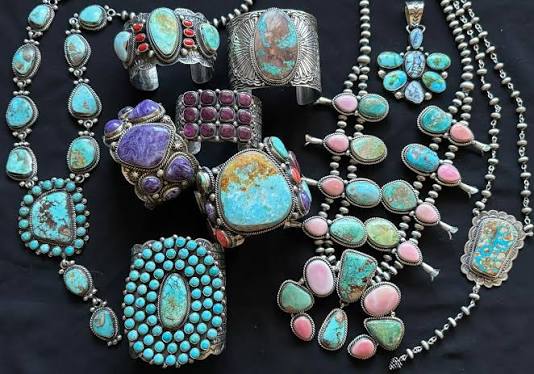
Among the most celebrated companions to turquoise is natural coral. Its rich shades of red, orange, and salmon create striking contrast against sterling silver while introducing warmth that immediately changes the personality of a design. Whether used as a single focal stone or combined with turquoise in carefully balanced compositions, coral has become one of the defining materials of Southwestern jewelry because of its ability to create visual energy without overwhelming the surrounding craftsmanship.
Coral also demonstrates the importance of colour relationships within jewelry design. Its vibrant tones naturally complement cooler gemstones, allowing artisans to produce compositions that feel balanced rather than competitive. When thoughtfully incorporated, coral adds depth and vitality while preserving the elegance that distinguishes exceptional handcrafted jewelry. Its enduring popularity reflects the remarkable harmony it achieves with both sterling silver and other natural materials.
Lapis Lazuli Offers Depth Through Colour
Lapis lazuli introduces a completely different visual experience. Its deep royal blue colour, often enriched by tiny flecks of pyrite, gives the gemstone a richness that has fascinated artists and collectors for thousands of years. Within Native American jewelry, lapis provides an elegant alternative to turquoise while maintaining the strong visual presence needed for bold silverwork.
Unlike brighter gemstones that immediately command attention, lapis often rewards closer observation. Its subtle variations, natural mineral inclusions, and remarkable depth of colour create jewelry that feels sophisticated and quietly dramatic. Artisans frequently choose lapis when they wish to achieve refined contrast through colour alone, allowing the gemstone’s natural richness to become the defining feature of the composition.
Jet and Onyx Celebrate Simplicity
Black gemstones occupy a distinctive place in Native American jewelry because they demonstrate how restraint can produce extraordinary visual impact. Jet and onyx introduce depth, clarity, and bold definition that enhance surrounding silverwork without relying on elaborate decoration. Their dark surfaces create striking contrast against polished sterling silver, allowing engraved details, stamped patterns, and sculptural forms to become even more pronounced.
These materials also illustrate an important principle of exceptional design: simplicity often requires greater confidence than complexity. Rather than competing with decorative silverwork, jet and onyx strengthen the overall composition through balance and proportion. The result is jewelry that feels timeless, elegant, and visually powerful despite relying upon a limited colour palette.
Spiny Oyster Shell and Mother of Pearl Expand the Artist’s Palette
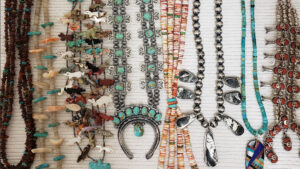
Some of the most distinctive colours found in Native American jewelry come not from gemstones but from natural shell. Spiny oyster shell introduces vibrant shades of orange, purple, red, and occasionally white, creating opportunities for bold artistic expression that few other natural materials can match. Mother of pearl, by contrast, contributes luminous whites and soft iridescent reflections that introduce elegance through subtlety rather than intensity.
These organic materials encourage artisans to think differently about composition. Their natural textures and colour variations allow them to function as visual bridges between silver and other gemstones, enriching the overall design while preserving harmony. They also demonstrate the remarkable diversity of materials available to Native American artists, proving that beauty is not confined to traditional gemstones alone.
Every Material Shapes the Character of the Finished Jewelry
Selecting a gemstone involves far more than choosing an attractive colour. Experienced artisans evaluate how each material interacts with silver, how it balances neighbouring stones, and how it influences the emotional presence of the finished piece. The same bracelet can feel bold, elegant, understated, or vibrant simply by changing the gemstones used within its design. Every natural material contributes something unique, allowing artists to communicate entirely different ideas while working within the same structural form.
This creative flexibility explains why Native American jewelry continues to display such extraordinary diversity. Instead of relying upon a single gemstone or predictable palette, artisans thoughtfully combine natural materials to produce jewelry with unmistakable individuality. Every completed work becomes a conversation between colour, texture, craftsmanship, and artistic vision, reminding us that exceptional jewelry begins long before the first stone is set into silver.
Conclusion
The world of Native American jewelry extends far beyond turquoise alone. Coral, lapis lazuli, jet, onyx, spiny oyster shell, mother of pearl, and many other natural materials have each contributed to a tradition celebrated for its creativity and remarkable artistic range. Their distinctive colours, textures, and natural character provide artisans with an extraordinary vocabulary for expressing originality through handcrafted design.
As collectors deepen their understanding of these materials, they begin appreciating jewelry from a broader perspective. Every gemstone becomes more than a decorative feature; it becomes an essential part of the artistic composition, carefully selected to strengthen balance, enrich visual harmony, and give every handcrafted creation its own unmistakable identity.