How Native American Jewelry Reflects Art, Nature, and Craftsmanship
Some forms of jewelry are designed primarily to follow fashion, while others are created to express artistic vision. Native American jewelry belongs firmly within the second tradition. Every handcrafted piece reflects a thoughtful relationship between creative design, carefully selected natural materials, and the technical ability required to transform raw elements into wearable works of art. Rather than relying upon mass production or temporary trends, artisans develop jewelry that demonstrates balance, originality, and respect for the materials they work with. The result is an artistic tradition that continues to captivate collectors, museums, designers, and enthusiasts around the world.
Understanding Native American jewelry becomes easier when viewed through three closely connected ideas: art, nature, and craftsmanship. Remove any one of these elements and the character of the finished piece changes entirely. Together, they create jewelry that is admired not only for its appearance but also for the remarkable process through which every design comes to life.
When Creativity Becomes Wearable Art
Art begins long before silver is shaped or a gemstone is placed into a finished setting. Every handcrafted piece starts as an idea that gradually develops through observation, imagination, and careful planning. An artisan considers proportions, visual balance, texture, movement, and the relationship between every component before fabrication begins. Unlike standardized manufacturing, where identical results are the objective, handcrafted jewelry allows creativity to influence every stage of development. Even when two artisans work with similar materials, their artistic decisions naturally produce entirely different results.
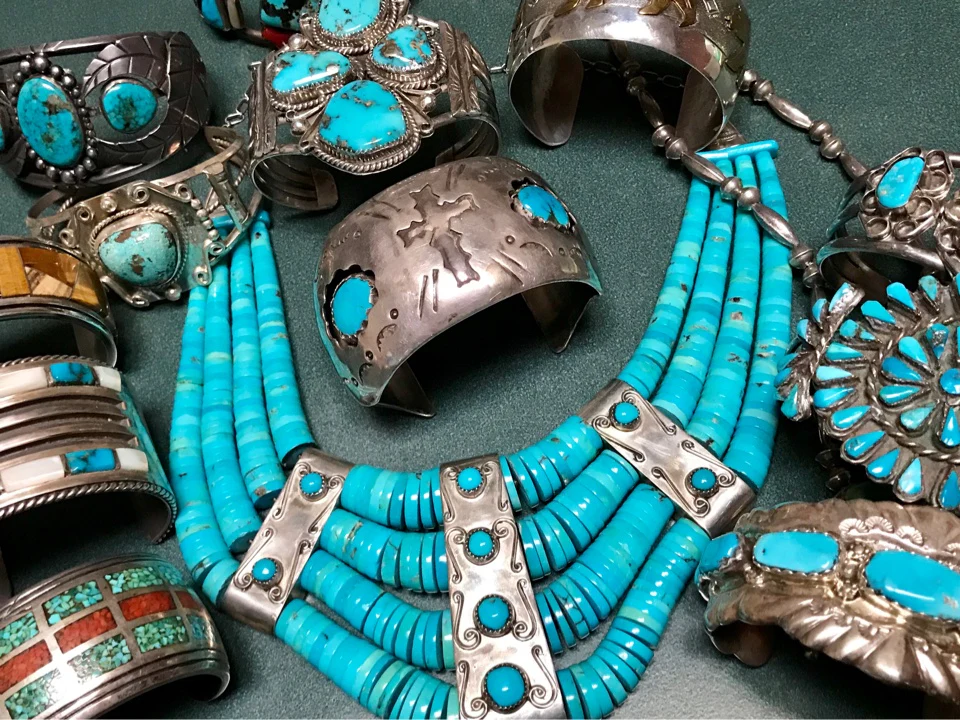
This freedom of expression is one of the defining characteristics of Native American jewelry. Curved silver surfaces, decorative stamp work, engraved details, sculptural forms, and harmonious gemstone placement all contribute to designs that communicate individuality rather than repetition. Each finished piece reflects the creative judgment of its maker, making every bracelet, necklace, pendant, ring, or pair of earrings a unique artistic composition rather than simply an attractive accessory.
Nature Provides the Foundation for Every Design
The natural world influences Native American jewelry long before craftsmanship begins. Sterling silver, turquoise, coral, jet, lapis lazuli, mother of pearl, spiny oyster shell, and many other natural materials possess distinctive colors, textures, and patterns that cannot be manufactured or duplicated exactly. Their individuality encourages artisans to respond creatively instead of forcing every design into predetermined forms. A gemstone displaying dramatic natural matrix may inspire one composition, while another with smooth, uninterrupted color may encourage a completely different artistic direction.
Nature also contributes something less visible but equally important: variety. No two natural stones develop under identical geological conditions, ensuring that every handcrafted piece begins with materials unlike any other. This individuality gives Native American jewelry much of its enduring character. Collectors frequently appreciate these natural variations because they reinforce the uniqueness of each creation while reminding us that exceptional jewelry begins with materials shaped by the earth over immense periods of time.
Craftsmanship Transforms Materials Into Lasting Beauty
Raw silver and natural gemstones become exceptional jewelry only through skilled craftsmanship. Every stage of production demands precision, patience, and technical understanding. Silver must be measured, heated, formed, joined, refined, and finished with extraordinary care, while gemstones require thoughtful preparation and secure settings that protect their natural beauty. Decorative techniques such as stamping, engraving, oxidation, repoussé, and bezel construction further enrich the finished design without overwhelming its overall balance.
Craftsmanship also determines how comfortably jewelry can be worn and how well it will endure over time. Structural integrity, carefully engineered connections, balanced proportions, and refined finishing ensure that every piece functions as beautifully as it appears. Appreciating this technical achievement allows collectors to recognize that craftsmanship is not merely a stage of production but the discipline that unites artistic vision with lasting quality.
Balance Is the Principle That Connects Everything
One characteristic appears repeatedly throughout exceptional Native American jewelry: balance. This principle extends far beyond visual symmetry. It influences the relationship between silver and gemstone, decoration and simplicity, texture and smooth surfaces, bold forms and delicate details. Every successful composition demonstrates restraint as well as creativity, ensuring that no single element dominates the entire design. Instead, every component contributes naturally to the finished piece.
This commitment to balance explains why many handcrafted designs remain visually appealing decades after they were created. Rather than depending upon fashionable trends, they rely upon timeless artistic principles that continue to resonate with new generations of collectors and admirers. Learning to recognize balance helps readers move beyond immediate appearance and appreciate the deeper design intelligence present within handcrafted jewelry.
Appreciating the Conversation Between Artist and Material
One of the most fascinating aspects of Native American jewelry is that the artisan rarely works against the materials. Instead, the creative process becomes a conversation between artistic vision and the natural qualities of silver and stone. A beautifully patterned turquoise cabochon may suggest a bold statement pendant, while a smaller gemstone with subtle coloring may inspire a more understated ring or pair of earrings. Rather than imposing identical solutions upon every material, experienced artisans adapt their designs to celebrate the individuality of each component.
This collaborative approach gives Native American jewelry much of its authenticity and originality. Instead of concealing natural variation, artisans often highlight it, allowing every finished piece to express qualities that could never be repeated exactly. The result is jewelry that feels alive with character because its final appearance grows naturally from the partnership between human creativity and the materials provided by nature.
Why This Relationship Continues to Inspire the World
The enduring appeal of Native American jewelry cannot be explained by craftsmanship alone, nor solely by natural gemstones or artistic design. Its lasting reputation comes from the seamless relationship between all three. Art provides imagination, nature contributes remarkable materials, and craftsmanship transforms those materials into objects that can be worn, appreciated, collected, and preserved for generations. Each element strengthens the others, creating a tradition that remains relevant regardless of changing fashions or decorative trends.
For anyone beginning to explore Native American jewelry, understanding this relationship offers a valuable new perspective. Every handcrafted piece becomes more than sterling silver and natural stone; it becomes evidence of thoughtful design, technical mastery, and the extraordinary ability of skilled artisans to transform the beauty of the natural world into enduring works of wearable art. This understanding enriches every future encounter with Native American jewelry and reveals why it continues to occupy such a respected place within the world of handcrafted decorative arts.