Few artistic traditions have shaped handcrafted jewelry as profoundly as Navajo silversmithing. Recognized around the world for its bold silverwork, exceptional craftsmanship, and enduring creativity, it represents generations of technical mastery refined through patience, observation, and artistic expression. Every bracelet, ring, pendant, squash blossom necklace, concho belt, or pair of earrings reflects a tradition that has continually evolved while preserving the values of careful workmanship and thoughtful design. Today, Navajo silversmithing is celebrated not simply for the jewelry it produces but for the remarkable journey that transformed a practical metalworking skill into one of North America’s most admired artistic disciplines.
Understanding this story reveals far more than the development of beautiful jewelry. It explains how innovation, resourcefulness, artistic independence, and the continual pursuit of excellence combined to establish a silversmithing tradition whose influence extends far beyond the American Southwest. Every handcrafted piece carries the legacy of artisans who refined techniques over generations, creating works that continue to inspire collectors, museums, designers, and fellow craftspeople throughout the world.
The Beginnings of a Remarkable Silversmithing Tradition
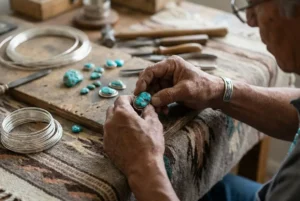
Navajo silversmithing emerged during the nineteenth century as artisans began mastering the techniques required to shape, forge, and decorate silver by hand. What began as the careful study of metalworking gradually developed into an artistic discipline distinguished by originality rather than imitation. Early silversmiths experimented with forming silver into functional and decorative objects, steadily refining their understanding of heating, hammering, soldering, engraving, and finishing. Every generation contributed new ideas while strengthening the technical foundations established by those who came before.
As experience grew, silver ceased to be viewed merely as a workable material and became a medium for artistic expression. Artisans discovered how surface textures, decorative stamping, sculptural forms, and carefully balanced compositions could transform simple sheets of silver into visually compelling works of art. This creative freedom encouraged continual experimentation, laying the groundwork for the distinctive design language that would later define Navajo jewelry.
From Practical Skill to Recognisable Artistic Identity
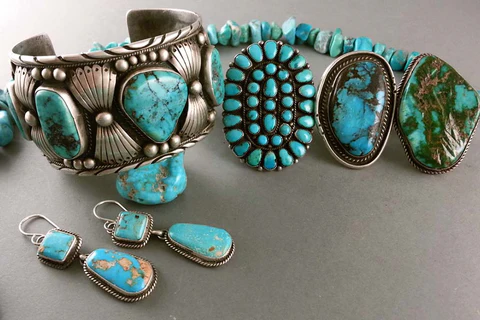
The evolution of Navajo silversmithing was shaped not only by improving technical ability but also by the development of a distinctive artistic philosophy. Rather than pursuing unnecessary complexity, many artisans focused on clarity of form, balanced proportions, and confident silverwork that allowed every design element to contribute meaningfully to the finished composition. Broad silver surfaces, carefully executed stamp work, harmonious symmetry, and thoughtfully positioned natural gemstones became defining characteristics that remain admired today.
This artistic identity continued to strengthen as artisans refined their personal styles. Although shared techniques connected generations of silversmiths, no two artists approached design in exactly the same way. Individual creativity became one of the tradition’s greatest strengths, ensuring that every handcrafted bracelet, necklace, pendant, or ring reflected both technical discipline and personal artistic vision. The result was a body of work remarkable for its consistency of quality while celebrating the originality of every maker.
The Techniques That Elevated Navajo Silverwork
Exceptional craftsmanship is built upon mastery of technique, and Navajo silversmithing became respected because artisans continually refined the methods that allowed their creativity to flourish. Forming silver by hand, creating secure bezels, producing decorative stamp work, engraving intricate patterns, shaping substantial cuffs, constructing silver beads, and achieving balanced finishing all demanded patience and precision. These techniques were never valued simply because they were technically difficult. Their importance lay in their ability to support artistic expression while ensuring structural strength and lasting durability.
Over time, these skills became increasingly sophisticated. Decorative methods evolved beyond simple ornamentation to become integral components of the overall design. Stamp work introduced rhythm and texture, engraving guided the viewer’s eye across the composition, while carefully proportioned settings allowed natural gemstones to complement rather than dominate the surrounding silver. Every technical decision served the larger artistic purpose of creating jewelry that felt unified, confident, and enduring.
Natural Materials Expanded Creative Possibilities
Although silver remained the foundation of Navajo craftsmanship, the introduction of natural gemstones transformed artistic possibilities. Turquoise became particularly admired for its remarkable colour variations, natural matrix, and ability to create striking visual contrast against polished silver. Coral, jet, shell, lapis lazuli, and other materials further expanded the creative palette available to artisans, encouraging increasingly diverse compositions while preserving the balance that defined Navajo design.
Importantly, gemstones were never treated as decorative additions alone. Skilled silversmiths carefully considered each stone’s colour, shape, proportion, and character before incorporating it into a design. Rather than forcing every material into identical settings, artisans allowed the individuality of each stone to influence the overall composition. This partnership between silver and natural materials remains one of the defining characteristics of exceptional Navajo jewelry.
Why Navajo Silversmithing Earned International Recognition
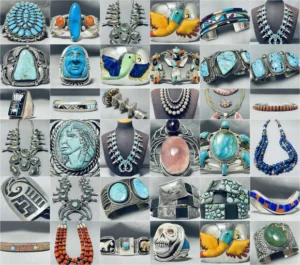
The reputation of Navajo silversmithing was not built through mass production or changing fashions. It developed because collectors, historians, museums, and jewelry enthusiasts consistently recognised the extraordinary combination of technical excellence and artistic originality present within the work. Every handcrafted creation demonstrated a level of skill that rewarded close observation, revealing refined craftsmanship through details often overlooked at first glance. This commitment to quality established a reputation that steadily expanded beyond the American Southwest and eventually reached an international audience.
As appreciation grew, Navajo jewelry came to represent more than regional craftsmanship. It became recognised as an important artistic tradition capable of standing alongside other respected forms of decorative art. Exhibitions, museum collections, academic research, and private collectors all contributed to preserving and celebrating the achievements of generations of silversmiths whose work continues to educate and inspire.
A Legacy That Continues Through Contemporary Artisans
The story of Navajo silversmithing did not conclude with earlier generations. Contemporary artisans continue refining traditional techniques while introducing fresh artistic ideas that reflect their own creative voices. Advances in tools and technology have expanded certain possibilities, yet the defining principles of careful craftsmanship, thoughtful design, and respect for materials remain central to the tradition. This balance between continuity and innovation allows Navajo silversmithing to remain relevant while preserving the qualities that established its reputation.
Today’s collectors benefit from this living tradition by witnessing craftsmanship that continues to evolve rather than merely repeat the past. Every newly created bracelet, necklace, ring, or pendant represents another chapter in a story still being written, demonstrating that exceptional artistry grows stronger when knowledge is preserved and creativity is encouraged.
Conclusion
The story behind Navajo silversmithing is ultimately a story of continual refinement. Through generations of experimentation, disciplined craftsmanship, artistic confidence, and thoughtful innovation, Navajo artisans transformed silver into one of the world’s most respected forms of handcrafted jewelry. Their achievements are visible not only in museum collections or celebrated masterpieces but also in every carefully crafted piece that reflects the same commitment to excellence.
Understanding this journey deepens our appreciation for Native American jewelry because it reveals the remarkable human creativity behind every finished work. Long before a bracelet is worn or a necklace becomes part of a treasured collection, it begins with knowledge, skilled hands, and an artistic tradition that continues to inspire the world through its enduring pursuit of craftsmanship and beauty.