What Makes Native American Jewelry Different From Other Handcrafted Jewelry?
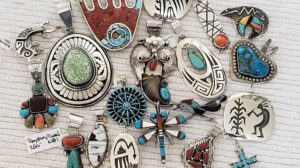
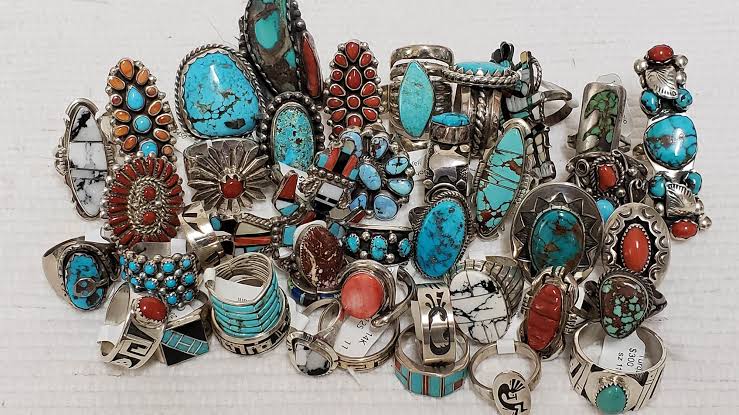
Native American jewelry occupies a distinctive place within the world of handcrafted decorative arts because it represents the convergence of skilled craftsmanship, artistic tradition, carefully selected natural materials, and generations of creative knowledge. While many forms of handcrafted jewelry demonstrate exceptional workmanship, Native American jewelry has developed its own visual identity through refined silversmithing, remarkable lapidary work, balanced design, and a deep appreciation for the individuality of natural gemstones. Every handcrafted bracelet, necklace, pendant, ring, pair of earrings, or squash blossom necklace reflects decisions made by the artisan rather than standardized manufacturing processes, resulting in jewelry that celebrates originality as much as technical excellence.
The distinction extends beyond appearance. Native American jewelry is admired not simply because it is handmade, but because every finished piece reflects a tradition of craftsmanship that continues to evolve while respecting established artistic practices. Understanding these characteristics allows collectors and enthusiasts to appreciate why Native American jewelry has earned enduring recognition among museums, historians, designers, and jewelry lovers throughout the world.
A Tradition Built on Individual Craftsmanship Rather Than Repetition
One of the defining qualities of Native American jewelry is that no two handcrafted pieces are expected to be identical. Every artisan approaches silver, natural gemstones, proportion, and decorative detail through personal experience and artistic judgment. This individuality distinguishes handcrafted work from industrial manufacturing, where consistency and uniformity are primary objectives. In traditional silversmithing, subtle differences in stamp work, engraving, stone placement, finishing, and composition are natural expressions of human craftsmanship rather than imperfections. These characteristics contribute to the identity of each piece, allowing collectors to appreciate originality that cannot be replicated through automated production.
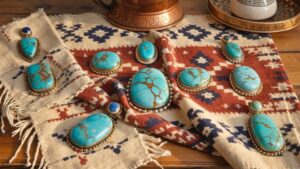
The creative process itself reinforces this individuality. Before fabrication begins, artisans evaluate the materials they have selected and determine how those materials will influence the overall design. A turquoise cabochon with dramatic spiderweb matrix may inspire an entirely different silver composition than a smooth blue stone, while a richly colored piece of spiny oyster shell may call for a different approach to proportion and ornamentation. Instead of forcing materials to conform to predetermined templates, experienced silversmiths frequently allow the natural character of each stone to guide important design decisions. This dialogue between artisan and material gives every handcrafted piece its own artistic personality.
Natural Materials Give Every Piece Its Own Identity
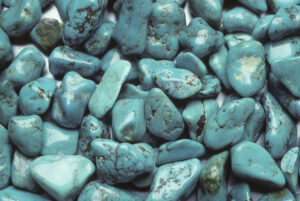
Unlike manufactured decorative elements that can be reproduced indefinitely, natural materials possess characteristics that develop over thousands or even millions of years. Turquoise, coral, jet, lapis lazuli, mother of pearl, spiny oyster shell, opal, and other materials each display variations in color, texture, pattern, and structure that cannot be duplicated precisely. These differences are among the reasons Native American jewelry feels alive with individuality. Collectors often appreciate a gemstone not because it is perfectly uniform but because it reveals qualities that exist nowhere else.
Sterling silver complements this individuality by providing a versatile foundation for artistic expression. It can be forged, engraved, stamped, textured, polished, oxidized, and shaped into countless forms while preserving the balance of the overall design. Rather than competing with the natural beauty of gemstones, silver enhances them, creating harmony between metal and material. The result is jewelry in which every component contributes to a unified artistic composition instead of functioning as separate decorative elements.
Design That Balances Beauty, Function, and Lasting Wearability
Exceptional Native American jewelry is admired not only for its appearance but also for the intelligence of its design. Every successful composition considers proportion, structural integrity, comfort, visual balance, and durability alongside artistic expression. A bracelet should feel secure without sacrificing elegance, a pendant should hang naturally, and a ring should protect its gemstone while remaining comfortable enough for everyday wear. These practical considerations are integrated into the creative process from the earliest stages, demonstrating that thoughtful design extends far beyond decoration alone.
Decorative details also serve an important purpose within the overall composition. Hand stamping introduces rhythm and texture, engraving creates visual movement, bezel settings secure gemstones while framing them attractively, and carefully placed oxidized finishes enhance contrast without overwhelming the design. Every element is evaluated according to its contribution to the finished piece, ensuring that beauty and craftsmanship remain inseparable throughout the work.
Appreciating the Difference Through Knowledge
The qualities that distinguish Native American jewelry are not always immediately visible to someone encountering it for the first time. Learning to recognize craftsmanship, understand natural materials, appreciate balanced design, and observe subtle construction details gradually transforms the way people experience handcrafted jewelry. What first appears to be a beautiful bracelet or necklace often reveals increasingly sophisticated levels of artistry as knowledge grows. This deeper understanding explains why collectors frequently spend years refining their appreciation while continuing to discover new aspects of craftsmanship in every piece they encounter.
Recognizing these distinctions also encourages more thoughtful collecting. Rather than selecting jewelry solely for its appearance, informed buyers begin evaluating artistic originality, technical execution, material quality, and the relationship between every component of the design. This shift in perspective transforms handcrafted jewelry from a decorative accessory into an enduring expression of artistic achievement.
Conclusion
Native American jewelry stands apart because it represents far more than handcrafted workmanship alone. It reflects the successful union of artistic imagination, refined silversmithing, carefully chosen natural materials, and design principles developed through generations of creative practice. Every handcrafted piece carries its own visual identity, shaped by the artisan’s decisions and the individuality of the materials from which it is created.
The more you learn about these defining characteristics, the easier it becomes to recognize why Native American jewelry continues to earn admiration around the world. Appreciating the craftsmanship behind each creation not only deepens your understanding of the jewelry itself but also reveals the remarkable artistry that has made this tradition one of the most respected forms of handcrafted decorative art in North America.