
Native American jewelry has earned worldwide admiration for its exceptional artistry, handcrafted quality, and timeless appeal. Yet its popularity has also given rise to countless misconceptions that often confuse first-time buyers and even experienced enthusiasts. Assumptions about turquoise, sterling silver, craftsmanship, authenticity, pricing, and artistic traditions frequently circulate without context, making it difficult to separate fact from fiction. Understanding the truth behind these common beliefs not only helps buyers make informed decisions but also encourages greater appreciation for the remarkable skill and creativity that define Native American jewelry.
Rather than accepting popular assumptions, it is worth examining the facts. Many of the ideas repeated most often about Native American jewelry oversimplify an artistic tradition that is both diverse and continually evolving. The following misconceptions are among the most common, and understanding them provides a stronger foundation for appreciating handcrafted Native American jewelry with confidence.
Myth 1: Every Piece of Native American Jewelry Contains Turquoise
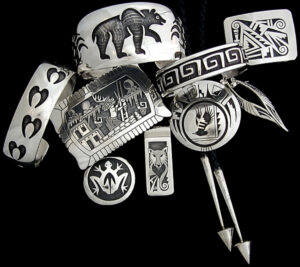
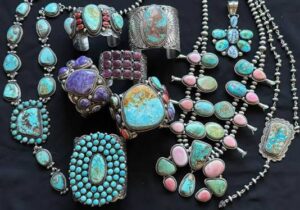
Turquoise has become one of the most recognizable gemstones associated with Native American jewelry, but it represents only one part of a much broader artistic tradition. Skilled artisans have long worked with coral, jet, lapis lazuli, mother of pearl, spiny oyster shell, onyx, opal, and many other natural materials. Some remarkable pieces contain no gemstones at all, relying entirely on the beauty of sterling silver through engraving, repoussé, hand stamping, overlay, or sculptural design. Appreciating this diversity helps collectors recognize that Native American jewelry is defined by artistry and craftsmanship rather than by any single gemstone.
Myth 2: Handmade Means Every Piece Should Look Exactly the Same
One of the defining characteristics of handcrafted jewelry is individuality. Natural gemstones vary in color, matrix, and texture, while every artisan develops personal approaches to proportion, decoration, and finishing. Small differences between similar pieces are evidence of genuine hand craftsmanship rather than manufacturing inconsistency. Collectors often value these subtle distinctions because they reinforce the originality of each creation and reflect the decisions made throughout the creative process.
Myth 3: A Hallmark Alone Guarantees Authenticity
Hallmarks provide useful information, but they should never be viewed as the only measure of authenticity or quality. Knowledgeable buyers evaluate craftsmanship, construction, materials, artistic execution, and available documentation alongside any identifying marks. Some authentic handcrafted pieces may not carry hallmarks, while a hallmark by itself cannot confirm the complete history or quality of a piece. Understanding this broader approach encourages more informed evaluation and greater confidence when appreciating Native American jewelry.
Myth 4: Bigger Gemstones Always Mean Better Jewelry
A large turquoise cabochon may attract immediate attention, but size alone does not determine artistic quality. Exceptional jewelry depends upon balance, craftsmanship, structural integrity, and thoughtful design. A modestly sized gemstone placed within a beautifully executed composition may demonstrate far greater artistic refinement than a much larger stone that overwhelms the overall design. Experienced collectors often evaluate how successfully every element works together rather than focusing on a single feature.
Myth 5: Native American Jewelry Is Only for Special Occasions
Many handcrafted pieces are designed to be worn and appreciated regularly rather than reserved exclusively for formal events. Rings, earrings, pendants, bracelets, and necklaces are available in a wide range of styles, allowing collectors to enjoy Native American jewelry in both everyday and special settings. Thoughtful craftsmanship combines beauty with wearability, making many designs suitable for daily enjoyment when cared for appropriately.
Myth 6: Every Southwestern Design Has the Same Origin
Southwestern jewelry encompasses a wide variety of artistic traditions, techniques, and regional influences. While Native American jewelry forms a significant and respected part of this artistic landscape, Southwestern jewelry includes diverse design approaches developed across the region. Recognizing this distinction helps readers appreciate the richness of Southwestern artistry while understanding the unique contributions of Native American silversmiths.
Myth 7: Sterling Silver Never Changes Over Time
Sterling silver naturally develops a patina as it reacts with elements in its environment. This gradual change is a normal characteristic of silver rather than a defect. Some collectors appreciate the subtle depth that patina adds to decorative details, while others prefer a brighter appearance achieved through appropriate cleaning. Understanding this natural process helps owners care for their jewelry with realistic expectations.
Myth 8: Collecting Is Only for Experts
Every experienced collector began as a beginner. Knowledge develops gradually through observation, curiosity, and continued learning rather than through formal expertise. Exploring craftsmanship, natural materials, artistic styles, and jewelry forms one step at a time allows anyone to develop confidence while enjoying the process of discovery. Collecting is less about knowing everything and more about remaining open to learning.
Myth 9: Older Always Means More Valuable
Age alone does not determine artistic or collector value. Craftsmanship, originality, condition, materials, provenance where available, and overall execution all contribute to how a piece is appreciated. Contemporary artisans continue to create extraordinary jewelry that reflects exceptional technical skill and artistic vision. Appreciating both historic and modern craftsmanship provides a more balanced understanding of Native American jewelry.
Myth 10: Learning Ends After the First Purchase
Owning a handcrafted piece is often the beginning rather than the end of the learning journey. Many collectors discover that each acquisition encourages new questions about gemstones, silverwork, artistic traditions, design techniques, and craftsmanship. This ongoing curiosity transforms collecting into a lifelong educational experience, where every bracelet, necklace, pendant, or ring offers another opportunity to deepen appreciation for Native American jewelry.
Conclusion
The enduring appeal of Native American jewelry is built upon knowledge as much as beauty. By looking beyond common misconceptions, collectors and enthusiasts gain a richer understanding of the craftsmanship, materials, artistic traditions, and thoughtful design that define every handcrafted creation. The more accurately we understand these remarkable works of art, the more rewarding it becomes to wear them, collect them, and appreciate the generations of creativity they represent.